The following blog post was written by a 2014 National Science Foundation (NSF) funded Research Experience for Undergraduates (REU) student following their internship at BIOS.
Hi my name is Michael Wooster and I am a senior
studying marine biology at the University of North Carolina at
Wilmington. I am working with Dr. Eric Hochberg in the Coral Reef Ecology and Optics Laboratory at
BIOS. I am investigating how coral community light-use efficiency
(LUE) changes under different environmental conditions. LUE describes the
ability of the community to convert light energy into sugar (via
photosynthesis). I explored the effects of elevated temperature, carbon
dioxide, and nutrients on LUE in a flume mesocosm. The results will give
us new insight to how the physiology of coral communities will respond to
expected environmental changes over the next few decades.


One good thing about
studying coral reef ecology is being able to call scuba diving work. I had an
amazing time diving on the reefs and doing a little science with it as well.
It was not just all
work, we also explored and had a lot of fun and adventures in the three months
that we were at BIOS. One of the biggest adventures we had was a 24 hour cruise
on the R/V Atlantic Explorer. After the initial wooziness we had a great time doing
some science out at sea collecting water samples from niskin bottles and the CTD.
There was also some down time where we explored the ship, watched a lot of
movies in the cinema room, ate delicious food by 5 star chefs, and napped here and
there.
There was also the time
that we were forced to stay in the library for 2 days because of category 2 hurricane Gonzalo. We made it through by watching movies, playing games, and
building forts to sleep in.
Bermuda is an island so
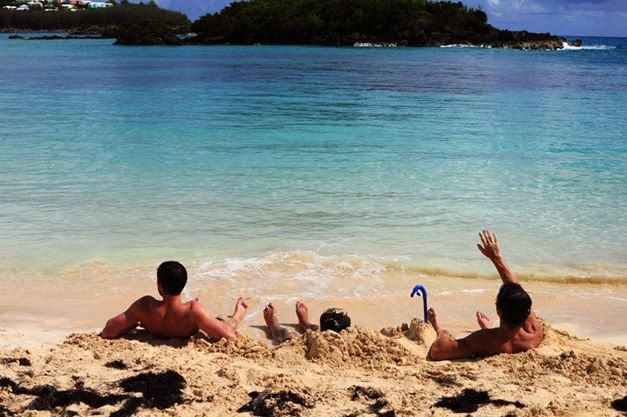
we can’t forget about the beaches. These are some of the best beaches I have
ever been to and the pink sand is so cool. Even though there are not that many
waves, you can be entertained by climbing rocky cliffs, snorkeling to see corals,
and my personal favorite, cliff jumping.